The Rome issue
Standing Under the Pantheon's Open Oculus in Rome
The best-preserved building of the ancient world costs €7 and needs half an hour, and it is at its best if you arrive in the first hour or the last.

By Tomás AlmeidaRome beyond the checklist
Stand in the middle of the Pantheon during a Roman downpour and you hear the rain before you see it: a hiss gathering somewhere above your head, then a grey column of water dropping through the nine-metre hole in the roof and disappearing into the marble. The ceiling has been deliberately unfinished since Hadrian's masons closed the last ring of concrete around the year 126, and in nineteen centuries nobody has had to rebuild it. Of everything you can walk into in this city for the price of a sandwich, this is the one that still makes a room full of strangers go quiet.
A dome nobody has had to rebuild
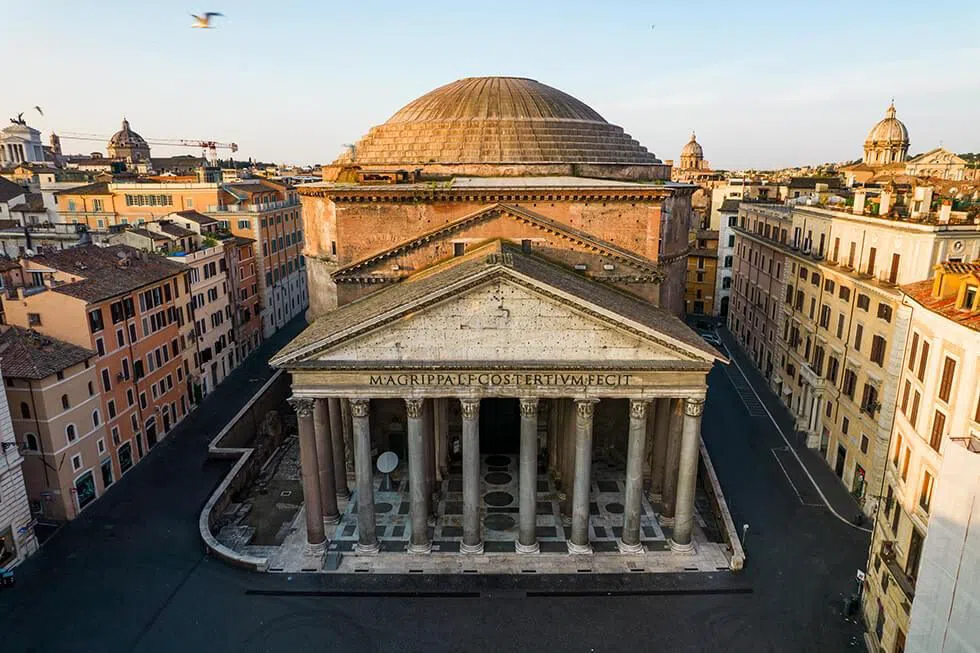
The Pantheon — Basilica di Santa Maria ad Martyres (Pigna, three minutes west of Via del Corso) is really two buildings wearing one name. The portico carries the inscription of Marcus Agrippa, who put up the first temple on this spot in 27 BC; the drum and dome behind it are Hadrian's replacement, raised in the 110s and 120s after fire took the original. Hadrian left Agrippa's name on the front, which is why half the visitors standing under the columns are reading a credit line belonging to a building that is no longer there.
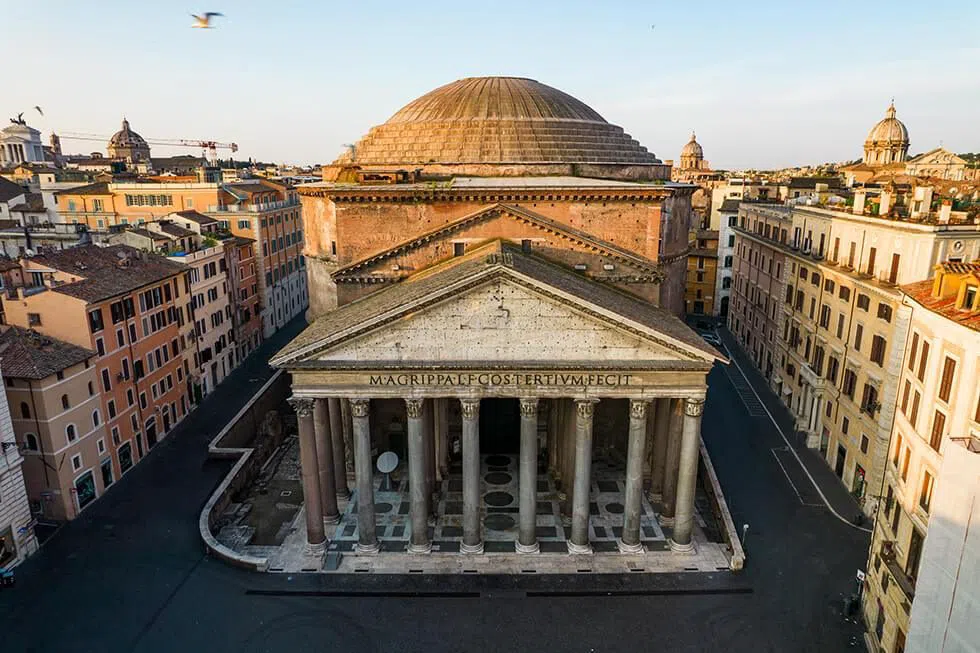
The structure that matters is above you. The dome is 43.3 metres across and almost exactly the same height from floor to oculus (a notional sphere sitting inside the room), and it is still the largest unreinforced concrete dome ever built. The Romans got there by cheating weight at every level: heavy stone aggregate at the base, lighter volcanic pumice as the shell climbs, the shell itself thinning towards the crown, and five rings of coffers carved out of the underside to remove mass that was never doing any work. The oculus, 8.7 metres wide and open to the weather, is the only window in the building. Take it away and the compression ring at the top becomes a problem nobody in antiquity had solved.
It survived because it changed job. In 609 it was consecrated as a church, Santa Maria ad Martyres, and a church gets maintained rather than quarried for its marble. That is also why you are expected to behave as though you are in one: Mass is still said here, the tombs of Raphael and of the first two kings of a united Italy sit in the side chapels, and the bronze doors you walk through are ancient.
Plan your Rome trip
Live prices from our booking partners.
Free cancellation on many rooms. We may earn a commission when you book.
What you actually see and do inside
The Pantheon is one room. There is no upper gallery, no dome climb, no underground route, no sequence of halls to work through. You come in under the portico, whose columns are single shafts of Egyptian grey and pink granite, shipped across the sea and dragged here, step up through the doors, and the room is simply there, all of it, at once.
The thing to do, and almost nobody does it, is stand still. Pick a spot under the oculus and watch the disc of sunlight on the wall. It moves visibly, sliding down across the coffers in the morning and onto the floor towards midday, so the room is never lit the same way twice in an hour. Then walk the perimeter clockwise and look at what is underfoot: the coloured marble squares and circles are the original Roman pattern, the floor is very slightly convex, and the drain holes at the centre are not a later repair but part of the design. The rain has always been allowed in, and always been allowed out again. Finish on the far side, looking back at the doorway, the one angle that tells you how thick these walls really are.
Twenty minutes covers it if you are moving through; forty if you want to read the chapels and wait for the light. Nobody needs half a day in here, and anyone telling you otherwise is padding an itinerary.
Tickets at the door and the case for booking ahead
Entry is €7 full and €2 reduced for EU citizens aged 18 to 25. Under-18s go free, Rome residents go free, and entry is free for everyone on the first Sunday of every month, which is, predictably, the day the queue is longest and the room is loudest. Tickets are sold only through the national Musei Italiani portal or at the on-site desk and machines. There is no third channel, whatever you are offered on the square. One detail catches people out: tickets are nominal, so the name on the booking has to match the ID in your pocket.
Opening hours are 09:00 to 19:00 daily, last individual entry 18:30, and the building closes on 1 January, 15 August and 25 December. Organised groups have to be inside by 18:00.
Whether to pre-book depends entirely on when you turn up. At 09:00, or after 17:30, the on-site machines are usually faster than anything you can do on a phone. Between roughly 10:30 and 16:00 in the warm months the line across the portico is long enough that €7 becomes the cheap part of the visit and your time becomes the expensive part. That is when a timed slot bought in advance earns its keep. A guided option exists and runs seven days a week, priced from 161 USD per person, and reviews for the most popular of those tours are landing at about 4.4 a day, so it is being booked steadily rather than occasionally. What a guide buys you here is context and the queue skip, not access: there is no part of this building that only a tour can reach.
Rules, dress and what groups have to do differently
It is a working basilica and the dress code is the standard Roman one: shoulders and knees covered, hats off, phones silent. Expect staff to ask the room to quieten down. They do it regularly, and they mean it.
Groups face rules rather than suggestions. Official group tickets cover parties of 10 to 26 people plus a companion, the group must be led by a licensed guide wearing a badge who stays with it the whole time inside, and any party over six has to use whisper or radio guides. That is a condition of entry, not a courtesy. Groups must also be through the door by 18:00 rather than 18:30. If you are a family of four, none of this applies to you. If you are eleven friends who have organised yourselves, it does: either book as an official group with a badged guide, or buy individual tickets and regroup inside.
Is it worth it
Yes, and it is not a close call. €7 buys you the best-preserved building of the ancient world, standing in the street grid it has always stood in, still doing the job it was given in 609. It suits almost everybody: first-timers with a tight list, returning visitors who want twenty quiet minutes, families with small children (one room, no stairs, nothing to climb and nothing to lose them in).
Two groups should adjust expectations. Anyone hoping to look down on the dome needs a rooftop, not a ticket: the building has no viewing level. And anyone imagining a hushed, contemplative hour in the middle of a July afternoon will not get one. The room is magnificent and it is also full. Go early, go late, or go in bad weather, and you get the version people write about.
Best time to go
The first hour, 09:00 to 10:00, is the quietest and the light is at its most theatrical, the sun disc high on the coffers and moving as you watch. The last hour before 19:00 is the next best, and in winter it is already dark outside by then, which turns the oculus into a flat grey disc and the room into something considerably stranger. Midday is when the beam lands on the floor (the photograph everybody wants) and also the busiest hour of the day, so you are trading calm for the shot.
Midweek beats the weekend. The free first Sunday of the month is the single worst day for crowds. If it rains, change your plan and come: watching the column of water fall and drain away shows you in thirty seconds what that hole in the roof is doing. Summer evenings stay light to closing; winter mornings are cold, bright and almost empty.
Plan the neighbours around their closures too. Wednesdays rule out Galleria Doria Pamphilj. Mondays rule out Palazzo Altemps, Palazzo Braschi and Largo Argentina. And Santa Maria sopra Minerva shuts in the middle of the day, which is exactly when most people wander round the back to find it.
Four interiors within five minutes, three of them free
Chiesa di Sant'Ignazio di Loyola (Pigna, two minutes away) is the obvious pairing for a short Pantheon visit and the best illusionist ceiling in the city at no cost at all. It is free and unticketed, open 09:00 to 23:30 with no midday break, so walk-in groups of any size are fine. Crowds bunch at the mirror and the viewing disc between 10:00 and 16:00; come late evening and you may have it to yourself. The church has publicly warned that no operator may charge for entry here. If someone sells you a ticket to it, they are selling you nothing.
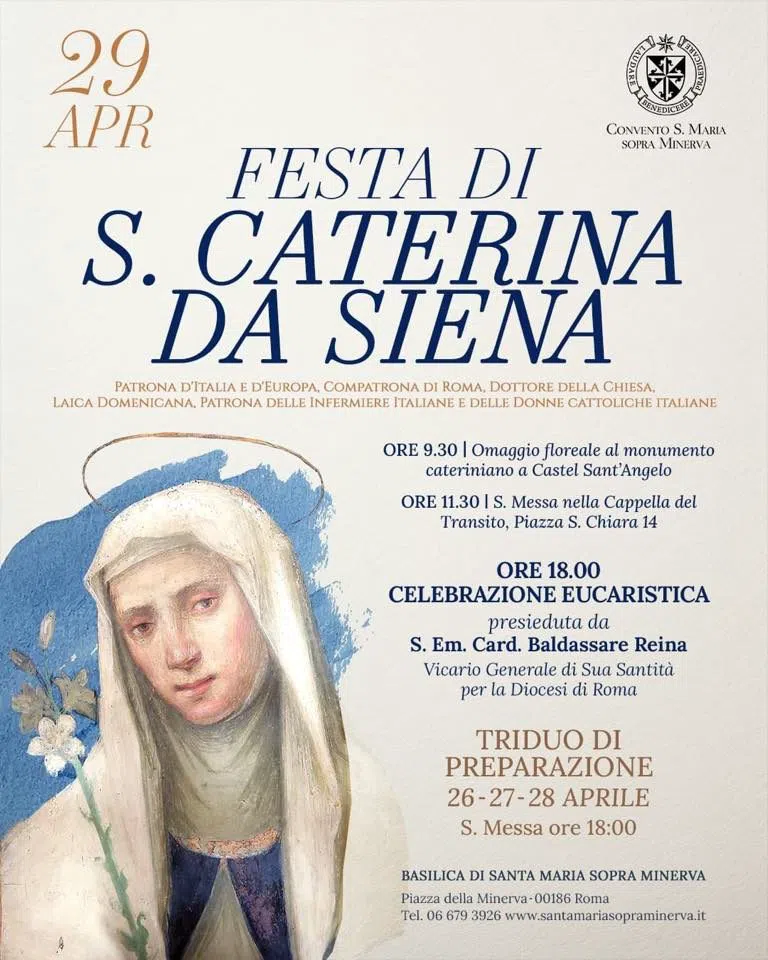
Basilica di Santa Maria sopra Minerva (Pigna, directly behind the Pantheon) is the strongest free follow-on, a gothic interior in a city that has very few. Entry is free with no ticketing, so small groups work, but the hours are tight, roughly 11:00 to 13:00 and 15:00 to 19:00, and it is an active Dominican basilica that shuts for services. Time the slot rather than the crowd.
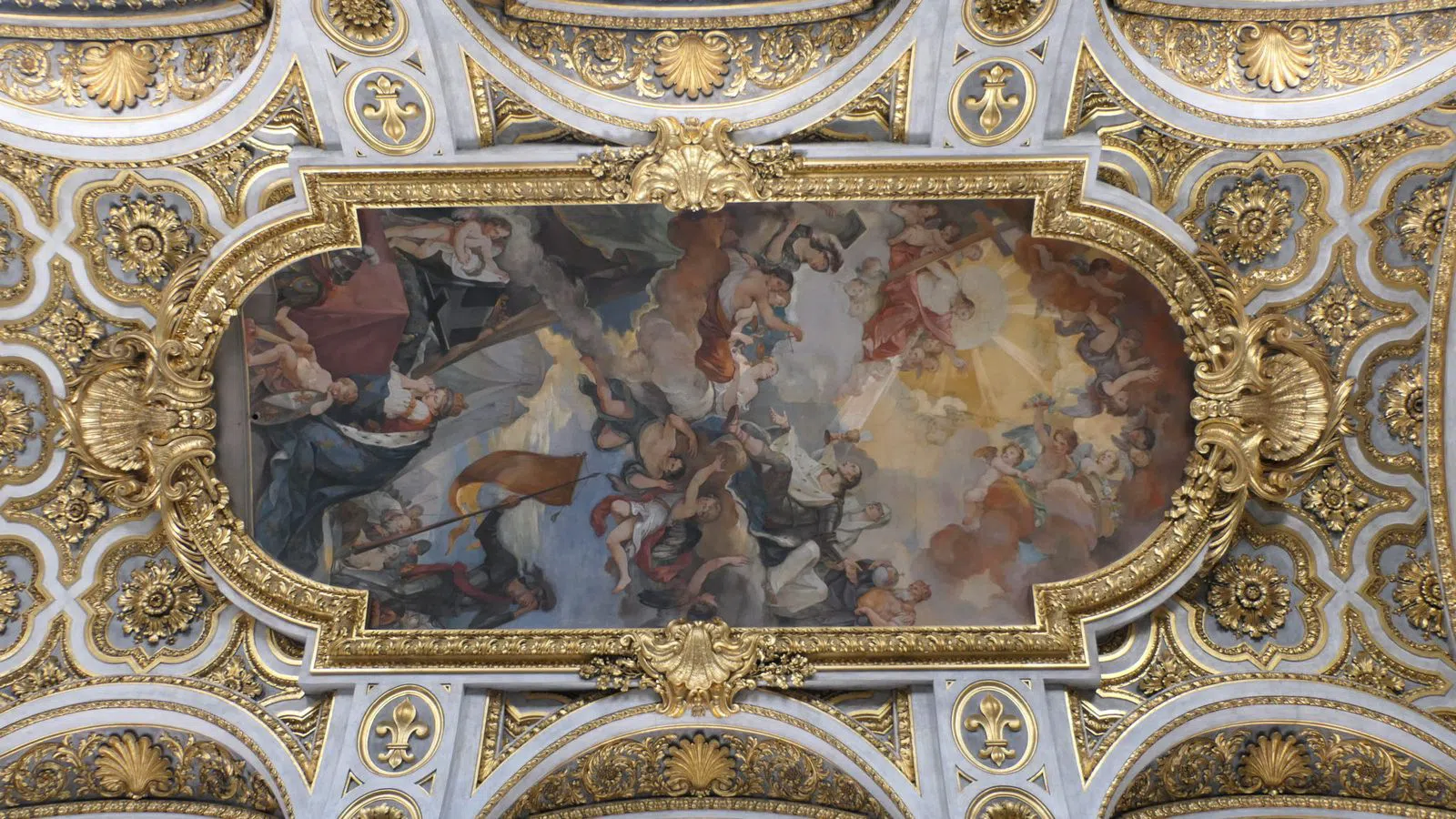
Chiesa di San Luigi dei Francesi (Sant'Eustachio, five minutes) gives you three Caravaggios for free. Bring €1 coins for the chapel lights. The chapel is a narrow bay that jams within seconds of a tour arriving, so a handful of people is fine and anything larger should split and rotate. Modest dress is enforced here, shoulders and knees, and it closes over lunch, so aim for 09:30 or just after the 15:00 reopening.
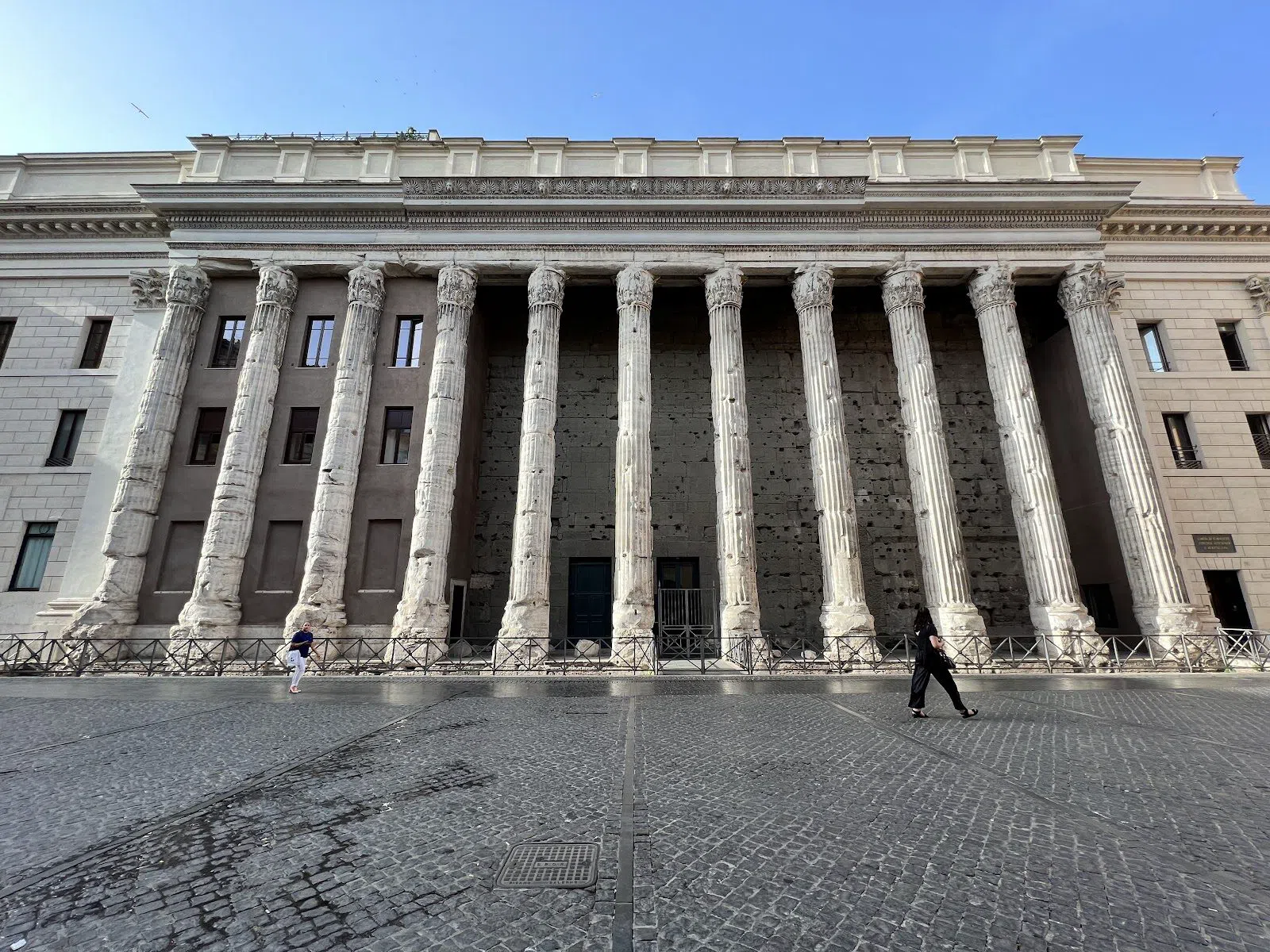
Tempio di Adriano (Hadrianeum) on Piazza di Pietra (Pigna, three minutes) is free, outdoors and open at all hours, which makes it the obvious thing to do while someone else holds your place in a queue. The colonnade half-swallowed by a later facade is the clearest demonstration in central Rome of how far the ground level has risen. The indoor multimedia room is a tiny theatre taking only a few people at a time, around €5.
Museums for the rest of the morning
Galleria Doria Pamphilj (Pigna, on Via del Corso) is a still-inhabited family palazzo and far quieter than the big state collections. €16 at the desk, €17 online, free under 12 and for EU and Italian disability card holders, audio guide included. Reservation is required for all entry and it is closed every Wednesday. There is no cloakroom and only small bags are allowed, which is the real constraint for a coach party; groups go through [email protected].
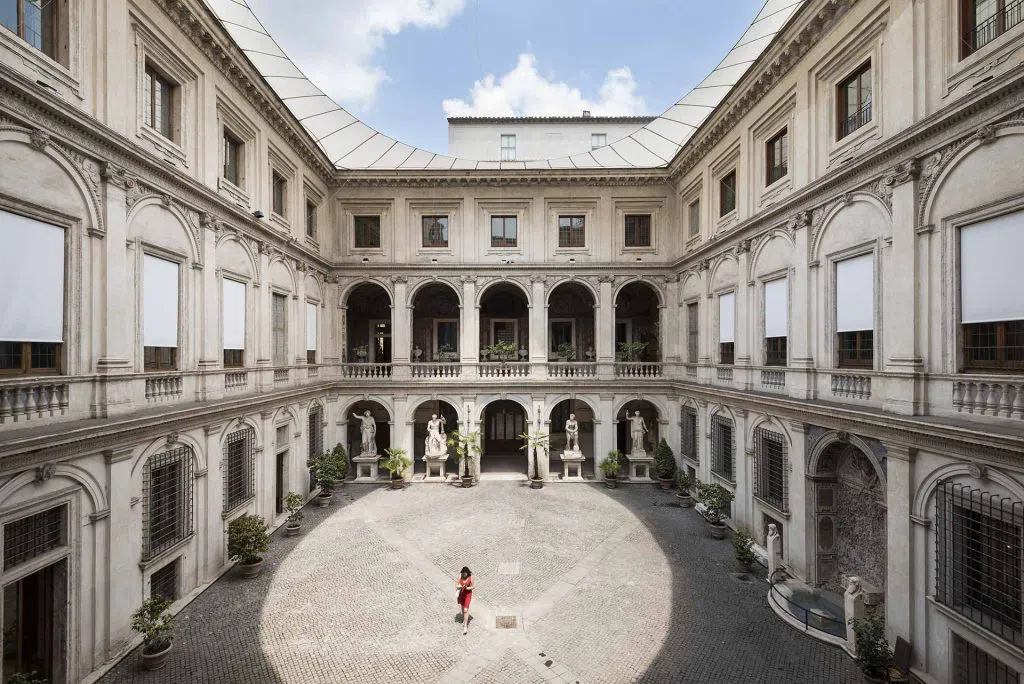
Museo Nazionale Romano — Palazzo Altemps (Ponte, ten minutes) is the best-value classical sculpture in walking distance and almost never busy, so a group can usually walk straight in. €8 full, €2 for 18 to 25, free under 18, or €16 for the combined pass covering the other National Roman Museum sites, plus €3 to €5 when an exhibition is running. Tuesday to Sunday, 09:30 to 19:00, last entry 18:00, closed Mondays.
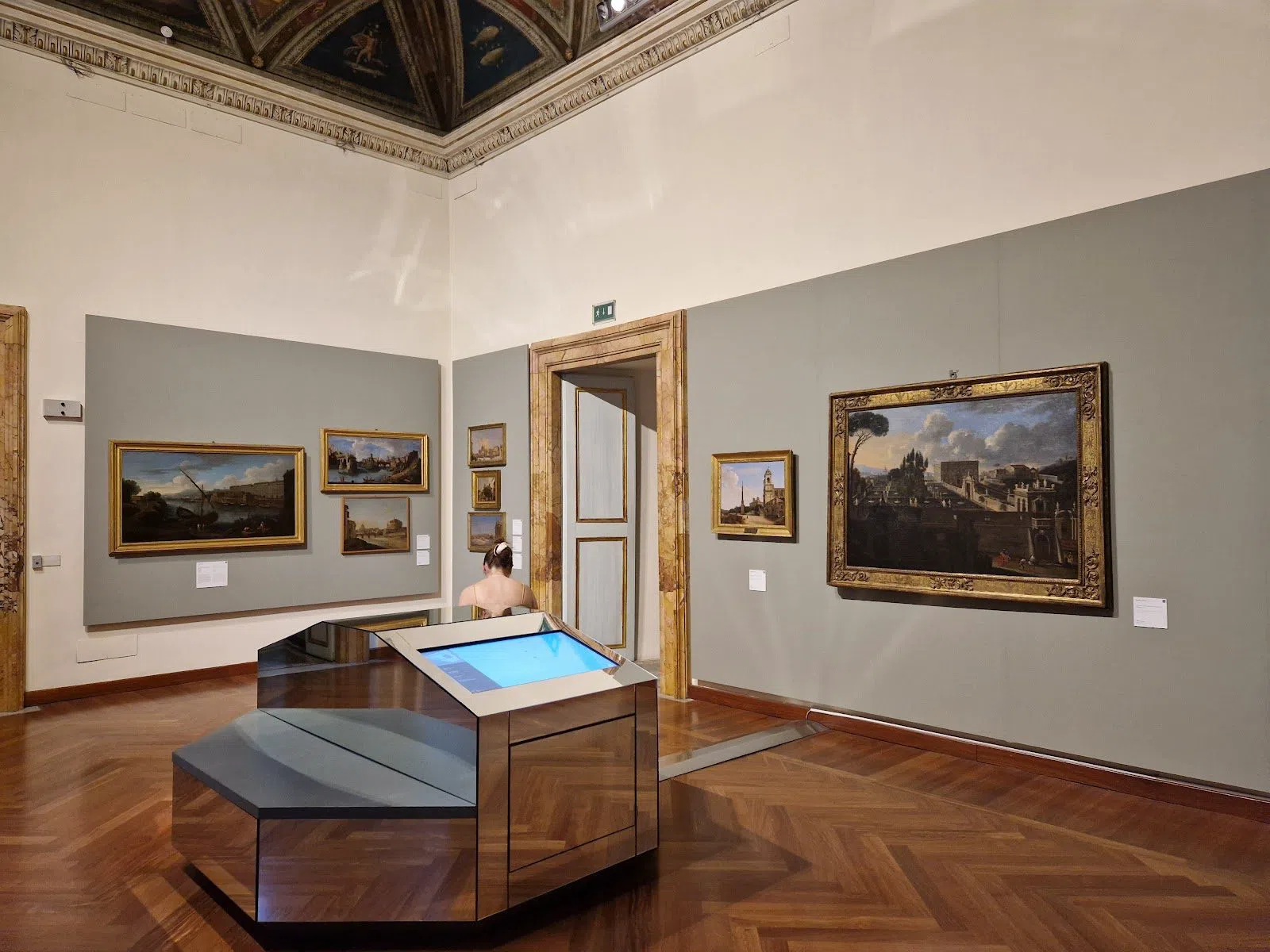
Museo di Roma — Palazzo Braschi (Parione, beside Piazza Navona) is the context stop if you want to understand what these streets looked like before the Vittorio Emanuele clearances cut through them. €13 adult, €11 reduced for over-65s and EU 6 to 25, free under 6, with prices varying by exhibition. Tuesday to Sunday, 10:00 to 19:00, closed Mondays, and easy to walk up to.
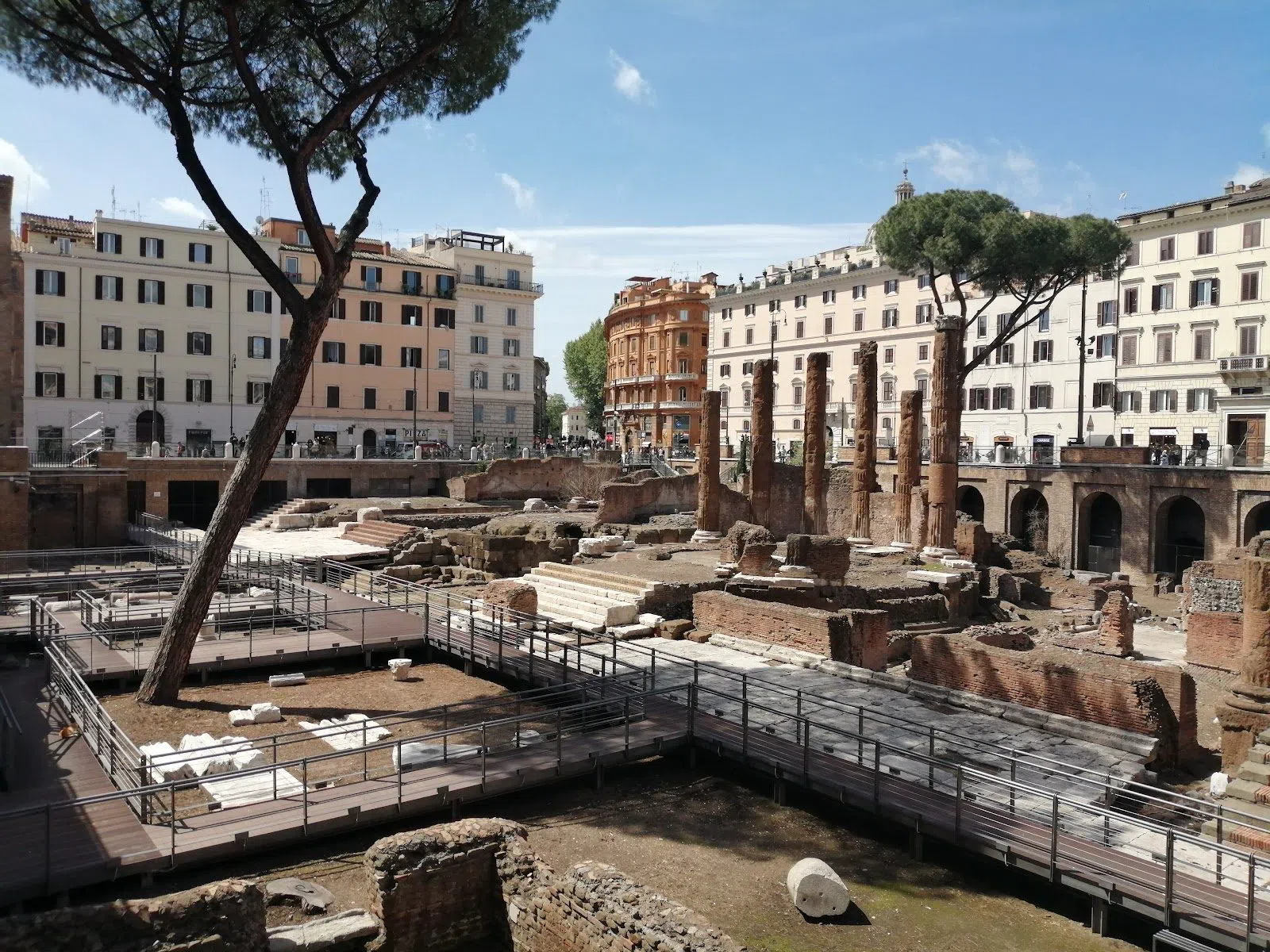
Area Sacra di Largo Argentina (six minutes south) opened to the public only recently after a Bulgari-funded restoration, and it is where Caesar was killed, now genuinely walkable rather than something you peer at from the railings. €4 to €5, free for MIC card holders, timed walk-in ticketing on a narrow walkway, so small groups only in practice. It is step-free with a lift platform, which makes it one of the more reliably accessible sites in the district. Closed Mondays, winter closing 16:00.
Coffee, gelato and the one booking worth making

Sant'Eustachio Il Caffè (Sant'Eustachio, three minutes) is the one coffee worth queuing for. Around €1.70 at the counter and roughly €5 seated, which is a steep multiple for the same cup. It is standing counter only with no reservations, so a group drinks in shifts. The gran caffè arrives pre-sweetened; ask for it without sugar if you want it plain. Open 07:30 to around 01:00.
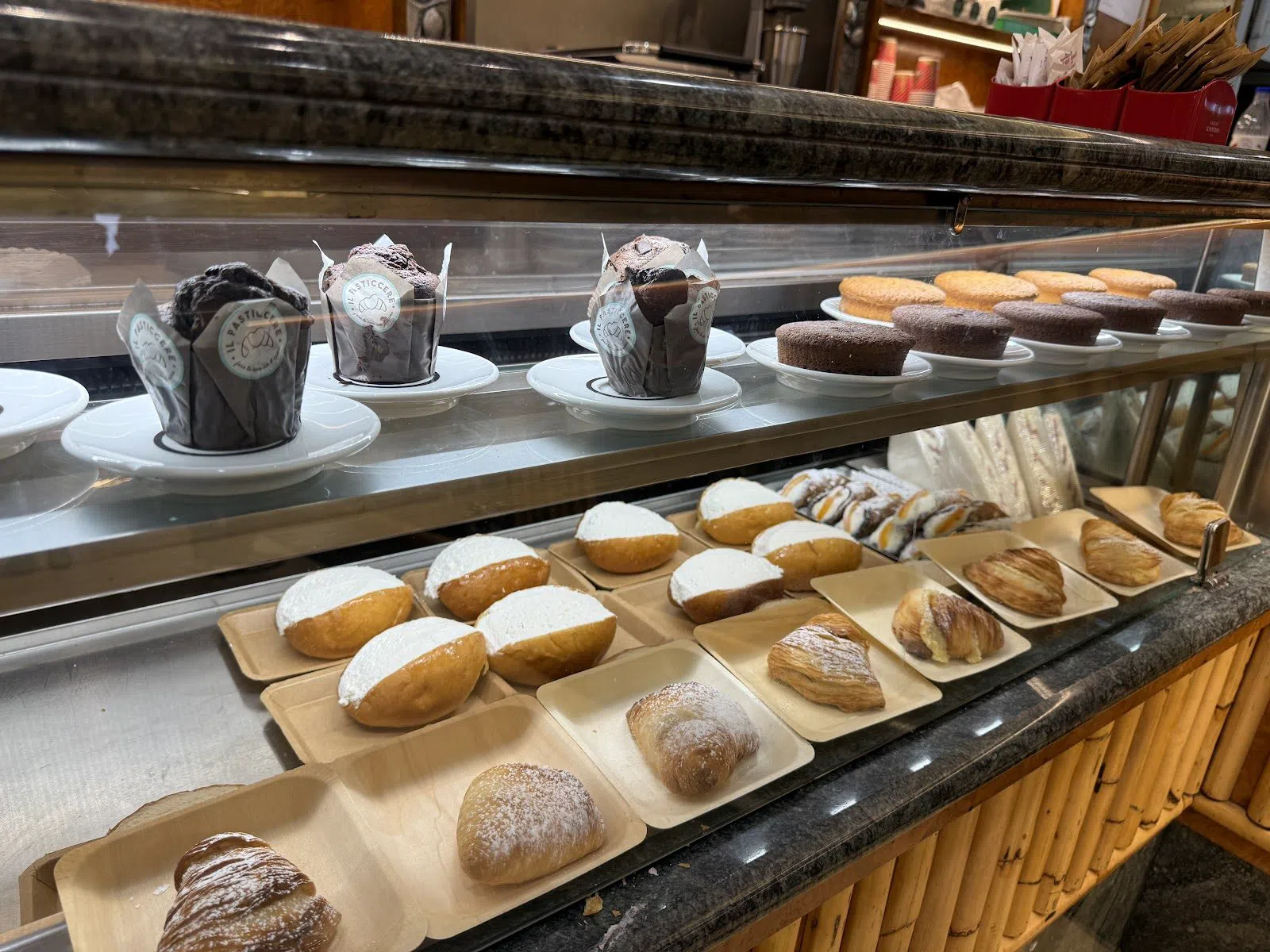
La Casa del Caffè Tazza d'Oro (Pigna, on Via degli Orfani) is the closest serious coffee to the Pantheon door, €1.50 to €5 depending on the drink and whether you stand. Walk-in only, no bookings, fine for a group happy to rotate through. In summer the house order is the coffee granita con panna, and it is the reason to come. Monday to Saturday 07:00 to 20:00, Sunday from 10:30.
Giolitti (Campo Marzio, five minutes north) is the benchmark gelato here and handles big crowds better than most because you pay first and order after. Roughly €3 to €6 for a cone or cup, more in the seated salon. Open from early morning until very late, which makes it an after-dinner stop as much as an afternoon one.
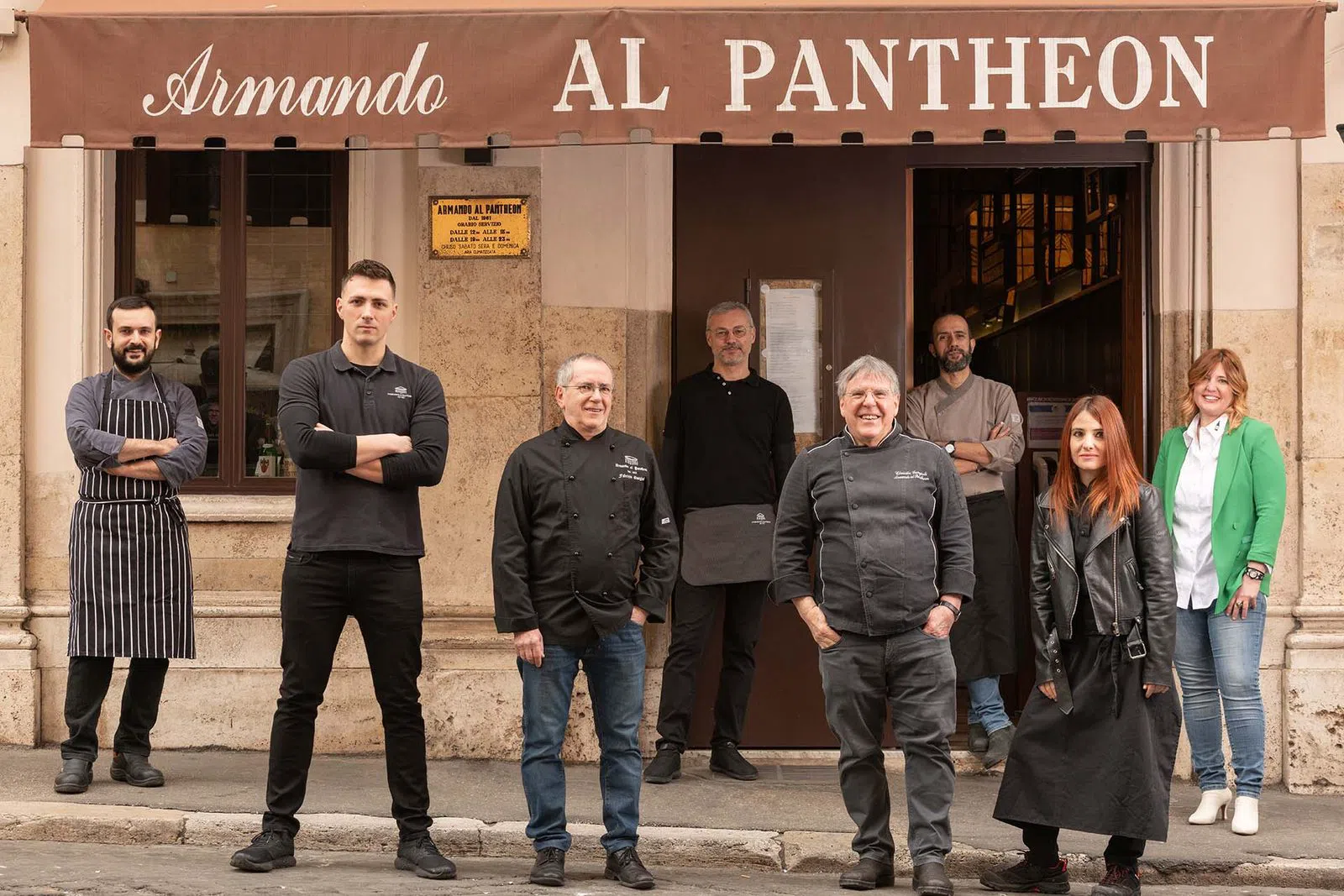
Armando al Pantheon (Pigna, on Salita de' Crescenzi) is searched by name constantly, and for once the reputation is earned: a genuinely good family-run trattoria since 1961, this close to a major monument, which almost never happens. The dining room is small, bookings are online only with no phone or email, and you should book weeks out; large parties will struggle. Lunch daily 12:30 to 15:00, dinner Monday to Friday only 18:00 to 23:00, closed Saturday evening and all day Sunday. Expect a proper three-course bill.
Looking down on the dome
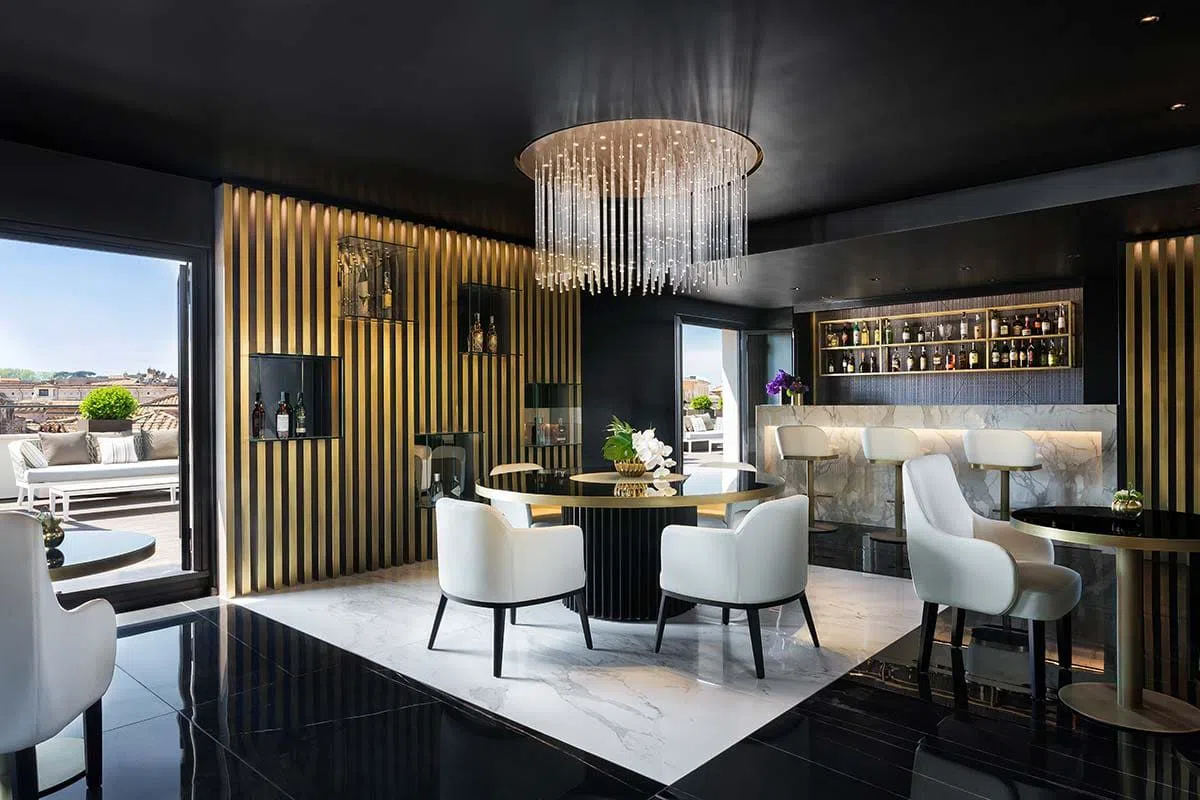
Divinity Restaurant & Lounge Bar at The Pantheon Iconic Rome Hotel (Pigna) is the closest paid view of the dome from above, and the single best Pantheon photograph available in the city. It is open to non-guests, not only residents, 11:30 to midnight, at hotel-rooftop prices of roughly €18 to €25 a cocktail. Reservations are strongly advised at sunset but availability-dependent rather than a fixed booking system, so a larger group should call ahead rather than assume.
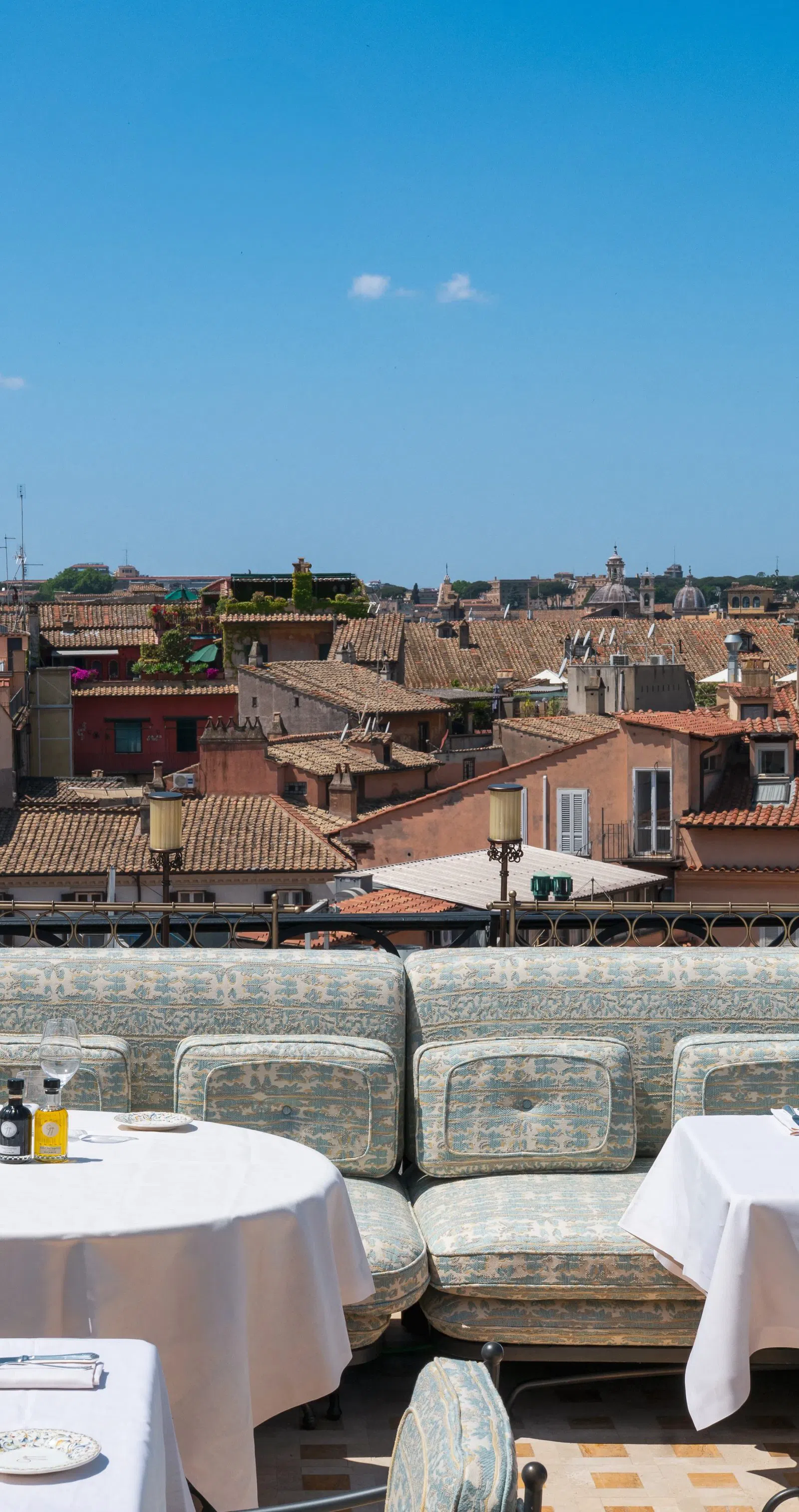
Gigi Rigolatto Roma at the Orient Express La Minerva (Pigna, on Piazza della Minerva) is the other rooftop. Note the name: this is the former Grand Hotel de la Minerve, reopened in April 2025 as Orient Express La Minerva, so the old 'Minerva Roof Garden' references floating around are out of date and you now book under Gigi Rigolatto. It takes bookings through its own reservations system, it is luxury-hotel priced, and it suits small groups and set dinners rather than a drop-in crowd.
If you want the 09:00 visit without crossing half the city to get to it, base yourself in these few streets: a Rome hotel search filtered to the Pantheon and Piazza Navona blocks puts everything in this article inside a ten-minute walk.
Where the walk ends
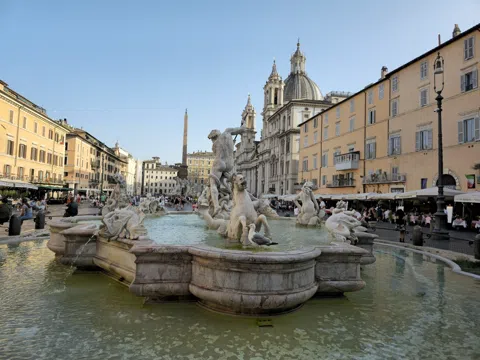
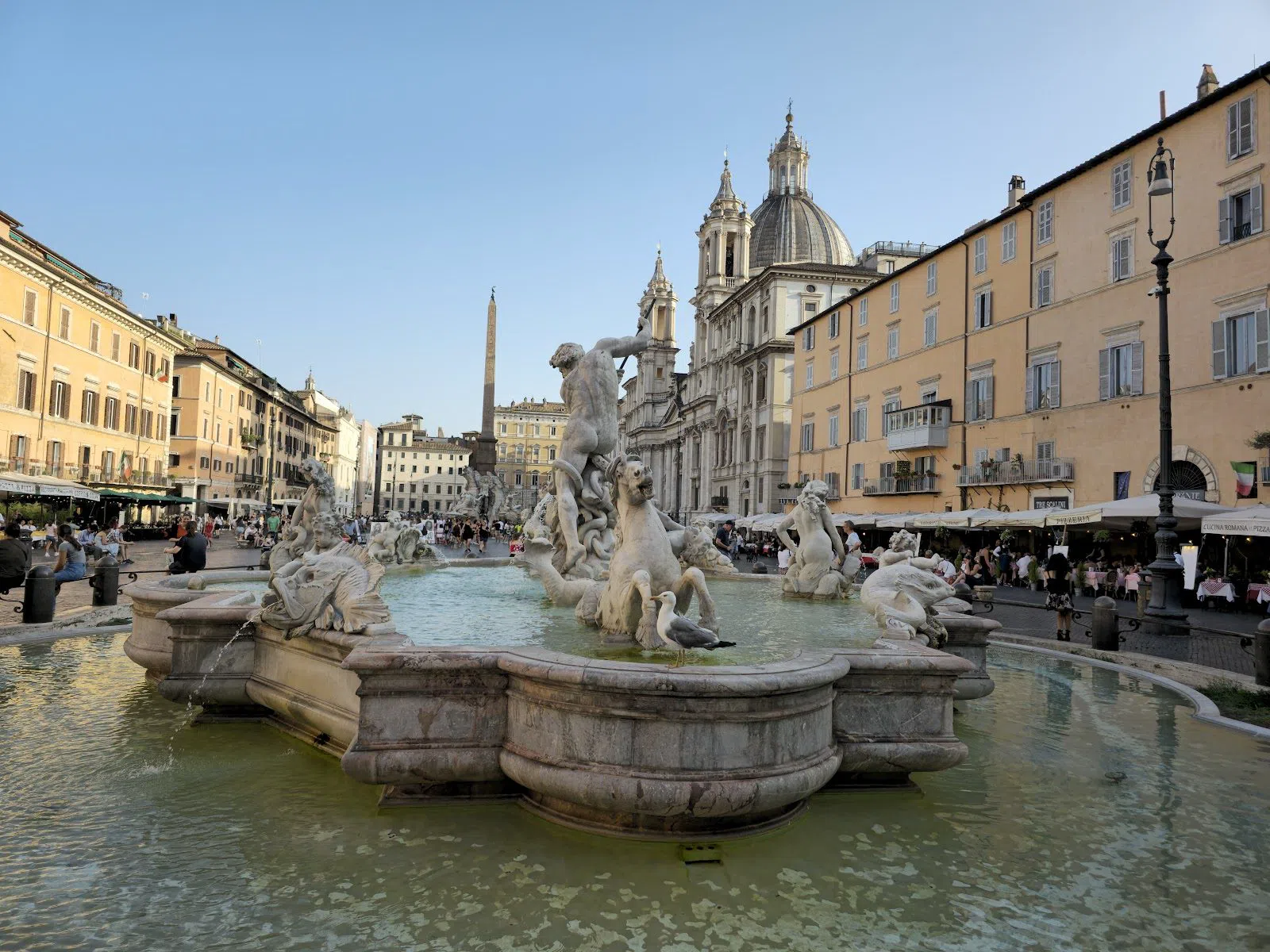
Piazza Navona (Parione, five minutes) is the other half of any Pantheon walk, a wide-open public square with no door policy at all, which makes it the natural muster point for a group heading towards the river. The café tables ringing it are heavily marked up for the view; eat and drink one street back and you will pay normal money for better food.
Practical notes
No metro station serves the Pantheon, and you will not arrive by car. The district is pedestrianised in patches and taxis drop you a couple of streets off. The useful hub is Largo di Torre Argentina six minutes away, where the bus routes and the tram converge; from the main station it is a bus to Argentina and a short walk in.
Cards work almost everywhere, including the Pantheon's own ticket machines, but carry coins anyway: €1 pieces for the chapel lights at San Luigi dei Francesi, and small change for standing coffee.
A sensible half day looks like this: Pantheon at 09:00 for €7, coffee at the counter for under €2, Sant'Ignazio and Minerva for nothing, Largo Argentina for €4 to €5, and lunch at Armando if you booked it weeks ago. A full day adds Palazzo Altemps at €8 or Doria Pamphilj at €16 to €17, gelato at €3 to €6, and a €18 to €25 cocktail at sunset if you want the aerial photograph. Everything named above sits inside the same ten-minute walking circle, which is the argument for staying here rather than commuting in. For the rest of the city (the other districts, the longer itineraries, the day trips), start with the Rome guide.
Before you go
Do you need to book Pantheon tickets in advance?
Not always. You can only buy tickets through the Musei Italiani portal or at the desk and machines on site. At 09:00 or after 17:30 the machines are usually quicker than booking on your phone, but between about 10:30 and 16:00 in the warm months the portico queue is long enough to justify a timed slot bought ahead. Tickets are nominal, so the name on the booking must match your ID.
How much does the Pantheon cost and who gets in free?
€7 full price, €2 reduced for EU citizens aged 18 to 25. Entry is free for under-18s, for Rome residents, and for everyone on the first Sunday of every month, though that is also the busiest and loudest day to visit.
How long does a Pantheon visit take and when is it quietest?
Twenty minutes if you are passing through, forty if you want to read the chapels and watch the light move. It is one room with no climb and no galleries. Quietest in the first hour after the 09:00 opening and in the last hour before the 19:00 close; last individual entry is 18:30.
What are the rules for groups and is a guide required?
Official group tickets cover 10 to 26 people plus a companion, and a licensed guide with a badge must lead the group and stay with it inside. Any party over six has to use whisper or radio guides. Groups must enter by 18:00. Individuals and families need no guide, only modest dress and quiet.
Can you get a table at Armando al Pantheon without planning ahead?
Rarely. Armando al Pantheon takes bookings online only, not by phone or email, and the dining room is small, so book weeks out; large parties struggle for space. Lunch runs daily 12:30 to 15:00, dinner Monday to Friday only, and it closes Saturday evening and all Sunday.